Submitted by Dr LAU Chun Wing Arthur on 21 April 2009
Department of Intensive Care, Pamela Youde Nethersole Eastern Hospital
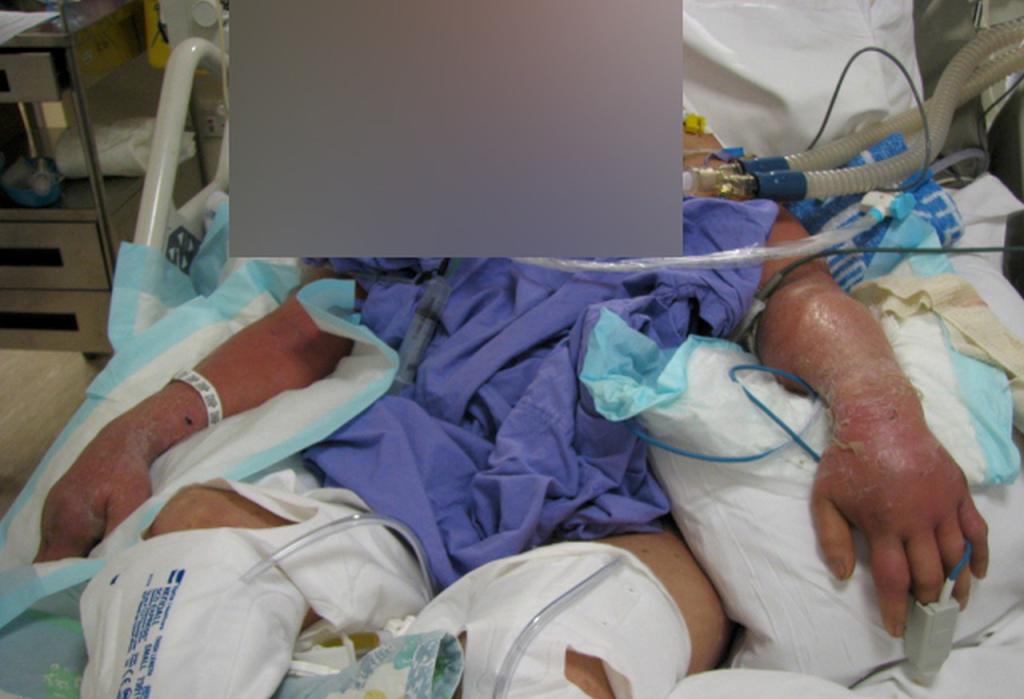
This 67-old man was admitted to the ICU due to strangulated hernia leading to peritonitis. He developed septic shock and acute renal failure requiring CRRT. Stabilization of the intra-abdominal condition was achieved by operation and total parenteral nutrition was started. Recovery of renal function was noted, but he developed multiple arthritis at elbows, wrists, fingers, knees and ankles.
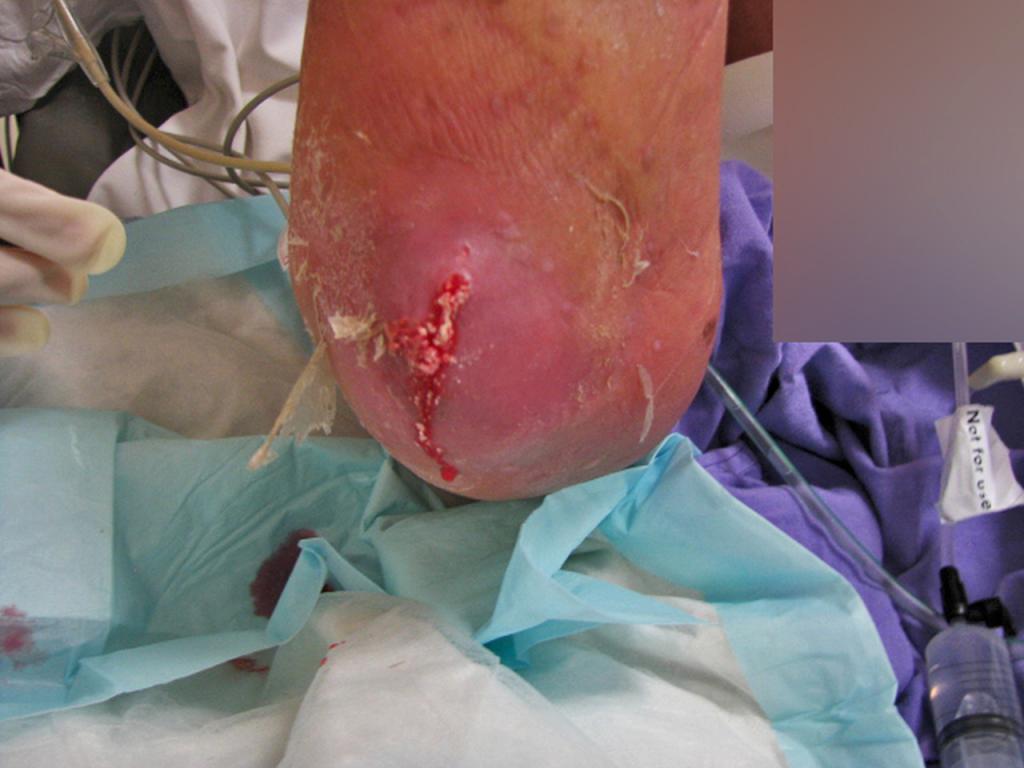
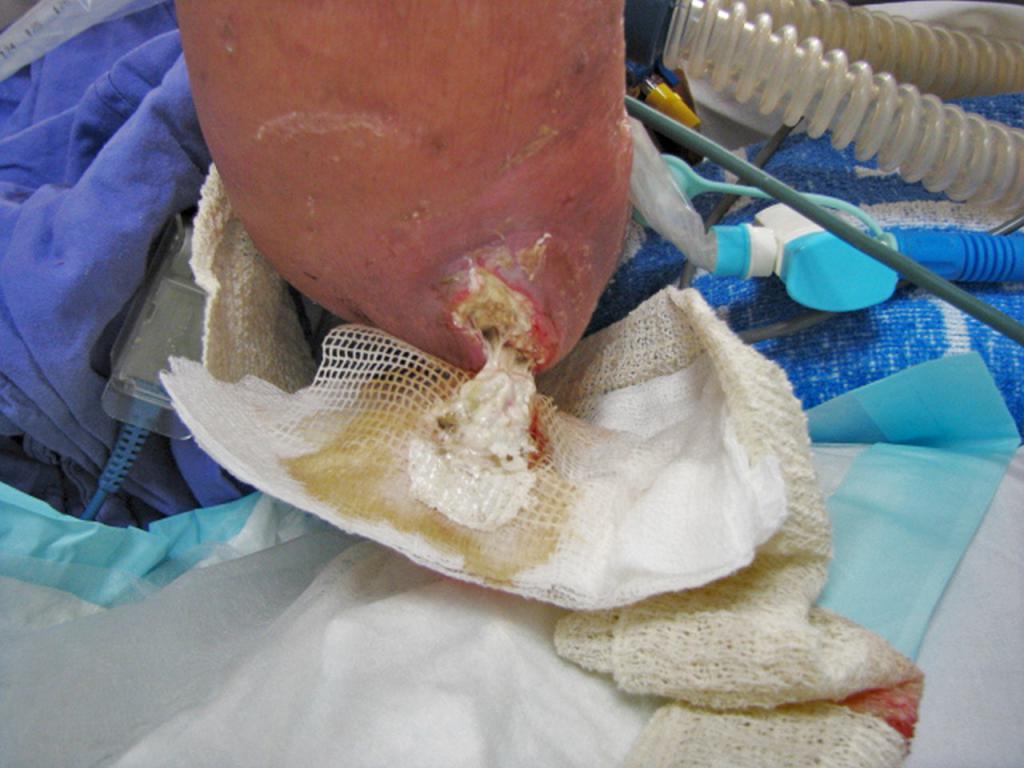
What is being expressed from this right elbow joint? Click Read More to see more photos.
 |
 |
|
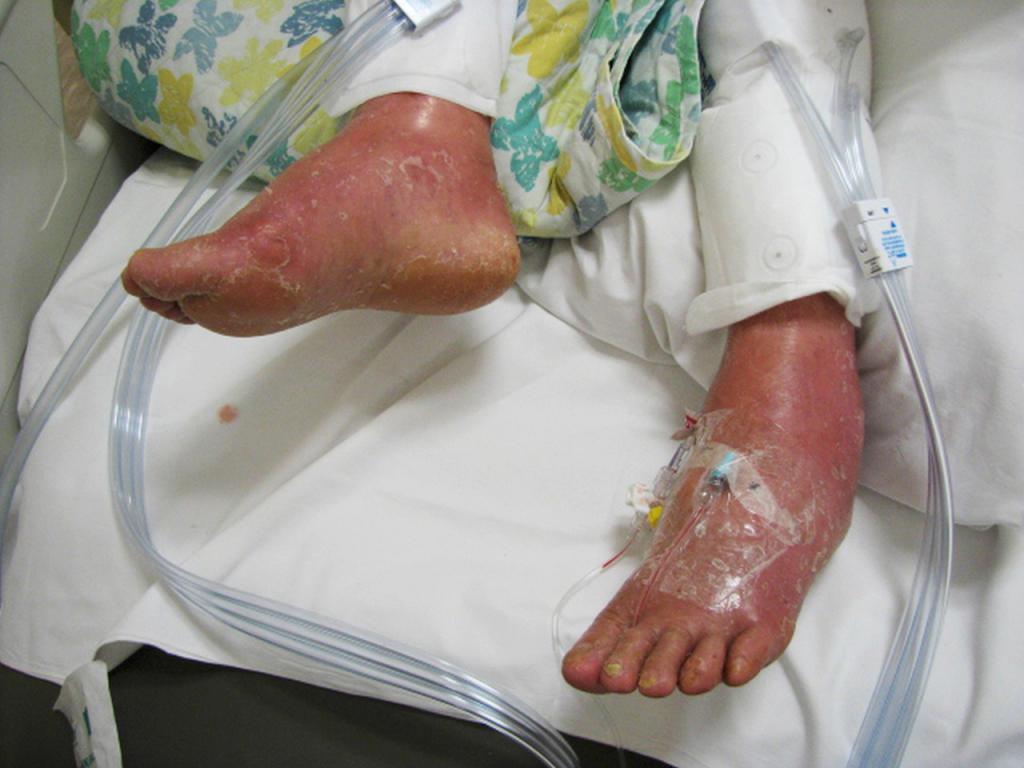
| Swelling around wrist and elbow joints of both sides | Swelling over both ankle joints |
 |
 |
|
| Right elbow (see also the video above) | Left elbow |
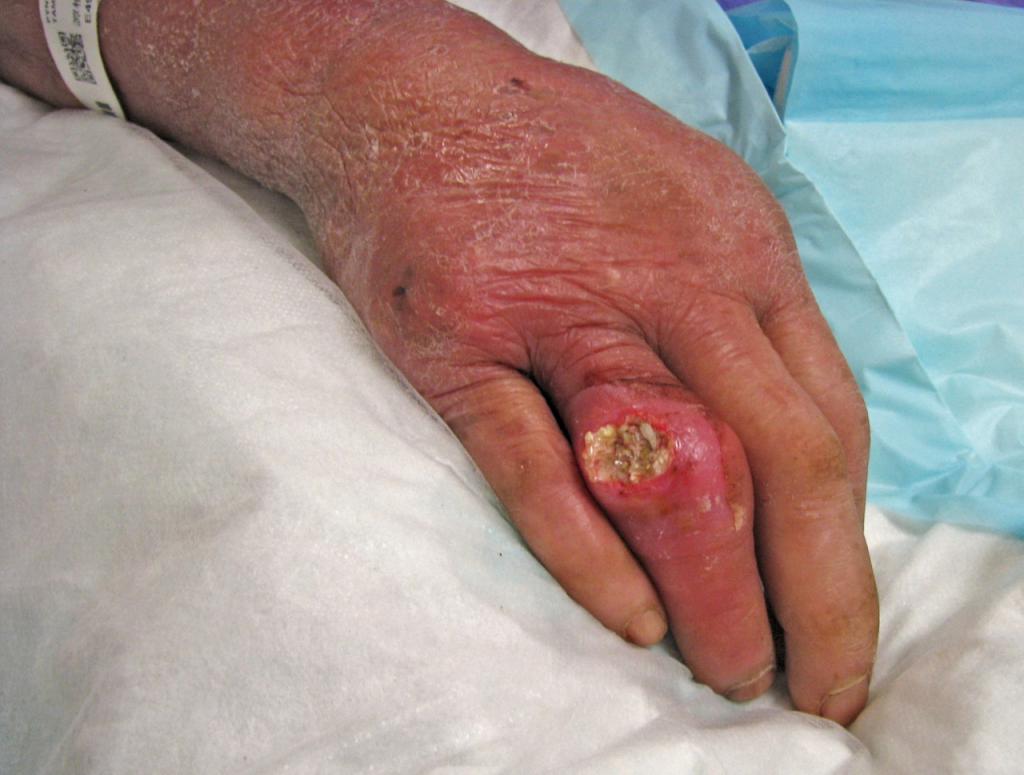 |
| Right ring finger |
Answer
Ruptured gouty tophi
Progress
Joint aspirate: Gram stain was negative, WBC trace, culture was negative. Serum uric acid level: 0.3 mmol/L only
Discussion
Acute gout usually occurs in hyperuricemic individuals, but in the ICU it can occur after a sudden drop in uric acid level caused by surgery or serious infection (Diamond 1989), and also by CRRT. Severel other risk factors for the development of acute gout, amongst many other factors, also existed in our patient, including renal disease, diuretics, use of iodinated contrast media CT studies, and use of parenteral nutrition (Becker 1988, Grahame 1970, Michet 1995). In our patient with a known history of gouty tophi, the uric acid level checked in the ICU was low. The mere presence of monosodium crystals in the joint is necessary but not sufficient to trigger an acute gouty attack as monosodium urate crystals exist in asymptomatic joints. Factors that affect crystal nucleation and growth and the balance between pro- and anti-inflammatory cytokines are also important in causing a gouty attack (Terkeltaub 1993).
Gout in elderly persons may present with several atypical features including a predisposition for involvement of the small joints of the fingers and a higher frequency of fever or even delirium accompanying acute attacks, and development of tophi earlier in the disease. All these factor existed in our patient.
Colchicine is the oldest drug for acute gout treatment, but its use is often limited by gastrointestinal (GI) side effects such as abdominal cramps, diarrhea, and nausea and vomiting, and by its potential for serious renal, hepatic, and bone marrow toxicity. We have avoided its use in our patient because of the possible side effects. Nonsteroidal anti-inflammatory drugs are generally the first-line agents for treatment of acute gout, but GI and renal side effects were of concern. Before the use of corticosteroids, septic arthritis has to be ruled out. Both intra-articular injection of methylprednisolone or sytemic corticosteroid are increasingly used for acute gout. Prednisolone can be started at 40 to 60 mg per day and tapered over 7 to 10 days. Allopurinol is to be avoided during acute attacks because sudden change of uric acid level may exacerbate the acute inflammation.
Regarding surgery, the largest number of patients reported to have undergone surgical treatment for tophaceous gout was done by Kumar et al 2002. Forty-five patients underwent surgery for gouty tophi. Sepsis control in infected or ulcerated tophi was the main indication for surgery (51%), followed by mechanical problems caused by foot, elbow and hand tophi (27%). The diagnosis of soft tissue masses was unclear in 18% of the patients prior to surgery. 4% of patients underwent tophus surgery mainly for pain control. 53% of patients experienced delayed wound healing as a result of complications of surgery with the majority of these patients (16/24, 67%) having infected or ulcerated tophi prior to surgery. Three patients (7%) required digital amputations for ongoing sepsis. 47% of patients did not have any complication of surgery and had complete wound healing within one week. The conclusion was that surgery for tophaceous gout was associated with a relatively high rate of complication when sepsis was the main indication. The tophi in our patient were only ulcerated but not infected.
Incision and drainage was done by orthopaedic surgeon, but uric acid crystals continued to form and joints remained very inflamed. For our patient who had just recovered from septic shock and acute renal shutdown, we used prednisolone at a lower dose of 15 – 20 mg daily with a cautious addition of voltaren, after consulting rheumatologic opinion. The gouty attack improved over a week. Morphine had to be given for the control of severe pain. Rehabilitation from the acute illness was significantly hampered by the limitation of movement from pain and the patient was severely deconditioned as a result.
Reference
- J.Raj, S.Sudhakar, K.Sems, R.Carlson. Arthritis in the intensive care unit. Critical Care Clinics, Volume 18, Issue 4, Pages 767-780
- Diamond HS. Control of crystal-induced arthropathies. Rheum Dis Clin North Am 1989;15(3): 557– 67.
- Becker MA. Clinical aspects of monosodium urate monohydrate crystal deposition disease. Rheum Dis Clin North Am 1988;14(2):377– 95.
- Grahame R, Scott JT. Clinical survey of 354 patients with gout. Ann Rheum Dis 1970;29:461.
- Michet CJ, Evans JM, Fleming KC. Common rheumatologic diseases in elderly patients. Mayo Clin Proc 1995;70(12):1205– 14.
- Terkeltaub RA. Gout and mechanisms of crystal induced inflammation. Curr Opin Rhematol 1993;5:510– 6.
-
Sunil Kumar, Peter Gow.A survey of indications, results and complications of surgery for tophaceous gout. Journal of the New Zealand Medical Association, 26-July-2002, Vol 115 No 1158