Photo courtesy of Dr Arthur CW Lau, PYNEH
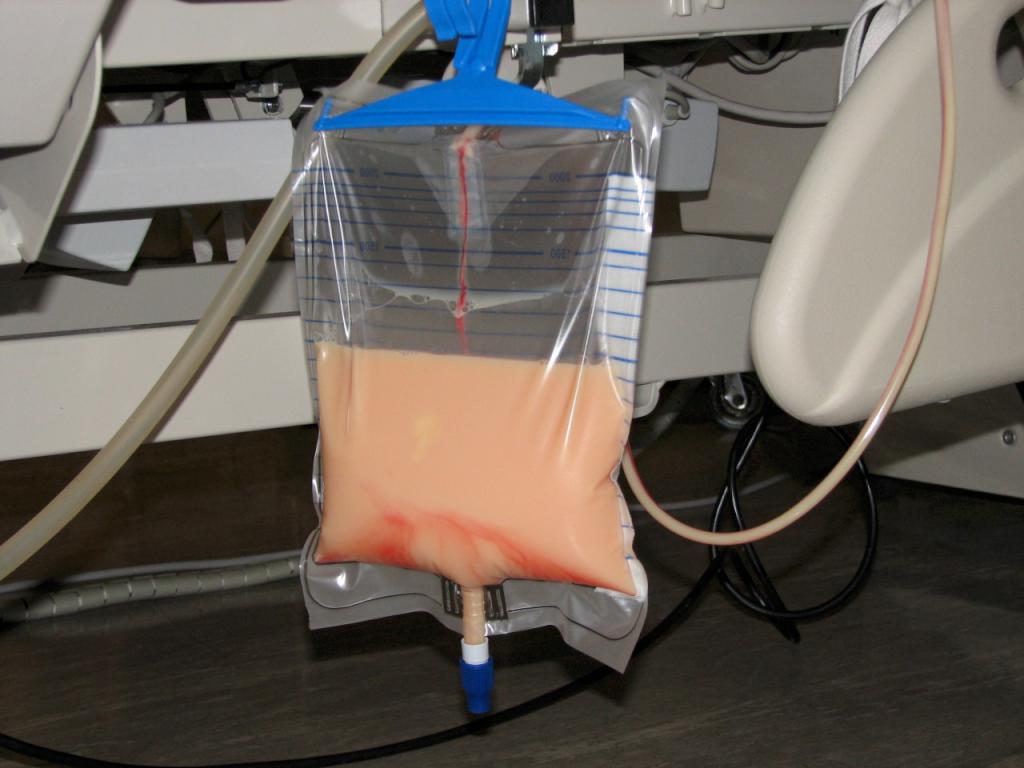
The above was drained from the nephrectomy bed in a patient status post-nephrectomy for a malignant left renal tumour. In general, which of the following is not to be considered as part of the management?
A. Conservative management, in combination with diuretics and restricted salt intake
B. a low protein, high-fat diet with long-chain triglyceride supplementation
C. total parenteral nutrition
D. Peritoneovenous shunting when there is chylous ascites despite repeated abdominal paracentesis
E. Surgical ligation of the leaking lymphatic duct(s)
F. octreotide (somatostatin analog)
Answer: B
The figure shows chyle mixed with blood, resulting in a "strawberry milkshake" color. Chyle drainage subsided with conservative measures a week after the operation.
The correct answer is a high protein, low-fat diet with medium-chain triglyceride supplementation. The rationale for using medium chain triglycerides (MCT) is because MCT bypass the lymphatic channels of the gut and enter directly into the portal venous system, whereas long chain triglycerides has to enter the portal venous blood through the lymphatics of the bowel. It has been recommended that MCT should be continued for several months after resolution of the ascites.
Total parenteral nutrition serves two important objectives: 1. fulfills nutritional requirement, 2. helps decrease lymph production and allows the bowel to rest.
Somatostatin decreases intestinal absorption of fats, lowers triglyceride concentration in the thoracic duct and attenuates the lymph flow in the major lymph vessels.
Other therapeutic measures may include intravenous etilefrine, a sympathomimetic drug which acts by contracting the smooth muscle of the thoracic duct to decrease the flow of chyle.
Reference
Shahzad S Shah, Kamran Ahmed, Richard Smith, Ravi Mallina, Pouya Akhbari and Mohammad S Khan. Chylous ascites following radical nephrectomy: a case report. J Med Case Reports 2008, 2:3 (Fulltext here, open access)