Submitted by Dr LAU Chun Wing Arthur on 12 December 2008
Department of Intensive Care, Pamela Youde Nethersole Eastern Hospital
History of Present Illness
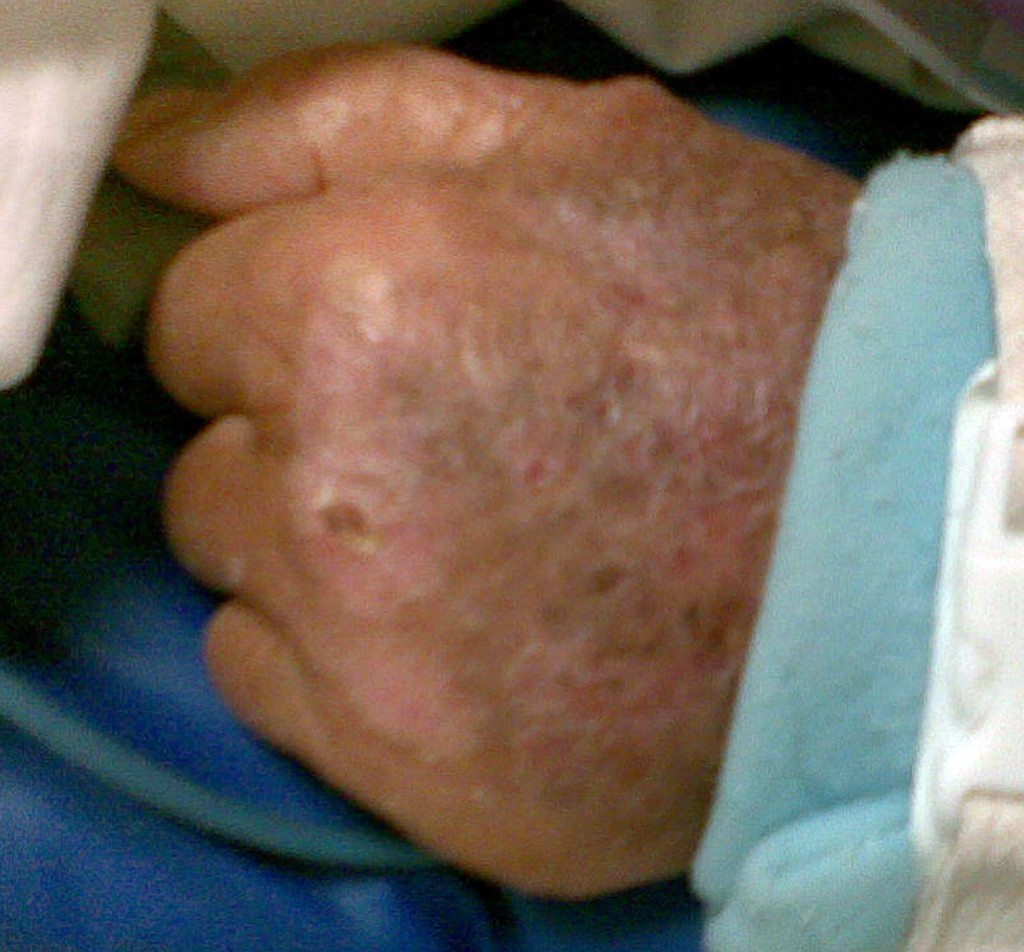
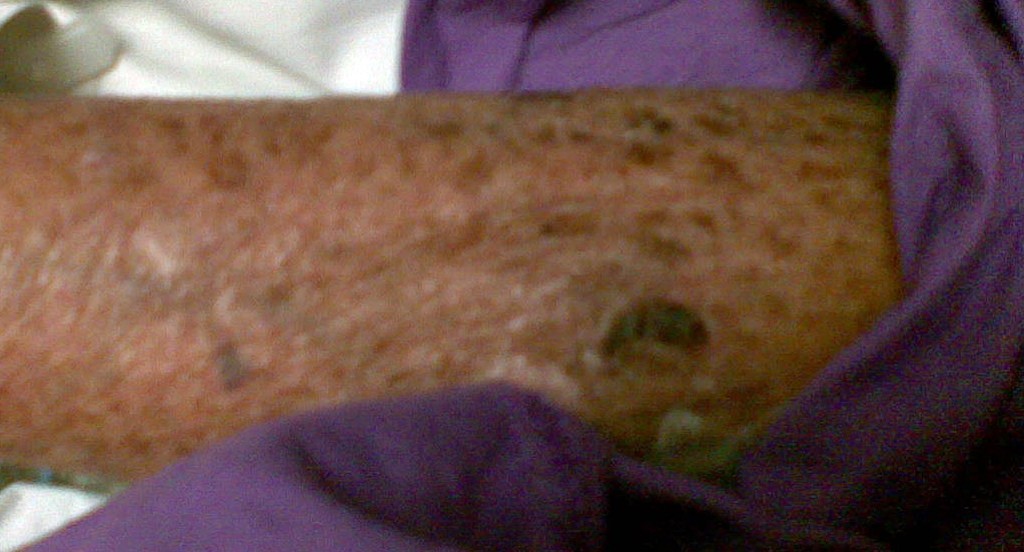
A 75-year old man who was said to be of good past health presented with right lower limb skin abscess. After drainage, he still had persistent fever. CXR showed bilateral infiltrates. The patient was confused and septic looking despite treatment with tazocin. His skin condition was poor, upper limbs and lower limbs had similar lesions as shown in the figures.
What is the underlying cause of the patient’s presentation?
Discussion
The skin was found to be dry and papery with easy bruising and also scarring, possibly from frequent scratching. There was mild obesity, but lower limbs were thin. We thought that iatrogenic Cushing’s syndrome may be the underlying cause of the skin lesions and skin abscesses.
We initially planned for a lumbar puncture examination because of fever and confusion. However, blood cultures and urine were positive for Candida species. Morning cortisol was 289, a very low value under this stressful condition. Steroid and amphotericin B (while pending Candida species identification) were started and the condition promptly improved with subsidence of fever within 2 days. No lumbar puncture was eventually performed, and confusion subsided.
We traced the drug history from his relatives. Actually, the patient had chronic knee pain, and had taken multiple over-the-counter medications without regular medical consultation, but just according to what a doctor had prescribed for him long time ago. The medications included paracetamol, NSAID, detropropoxyphene, and a yellow tablet which was pentagon in shape as shown in the figure.

Could this be some form of steroid, like Dexamethasone? We thought so. The tablet could not be definitely identified.
Clinical pearls
- Watch out for the skin manifestations in iatrogenic Cushing’s syndrome. It is not difficult to pick up.
- Ask for a detailed medical history and drug history. If the patient cannot cooperate, ask the relatives. A good history could have saved a lot of time finding out the underlying cause of the disease manifestations.