Dr CHAN King Chung Kenny
Pamela Youde Nethersole Eastern Hospital
6 January 2009
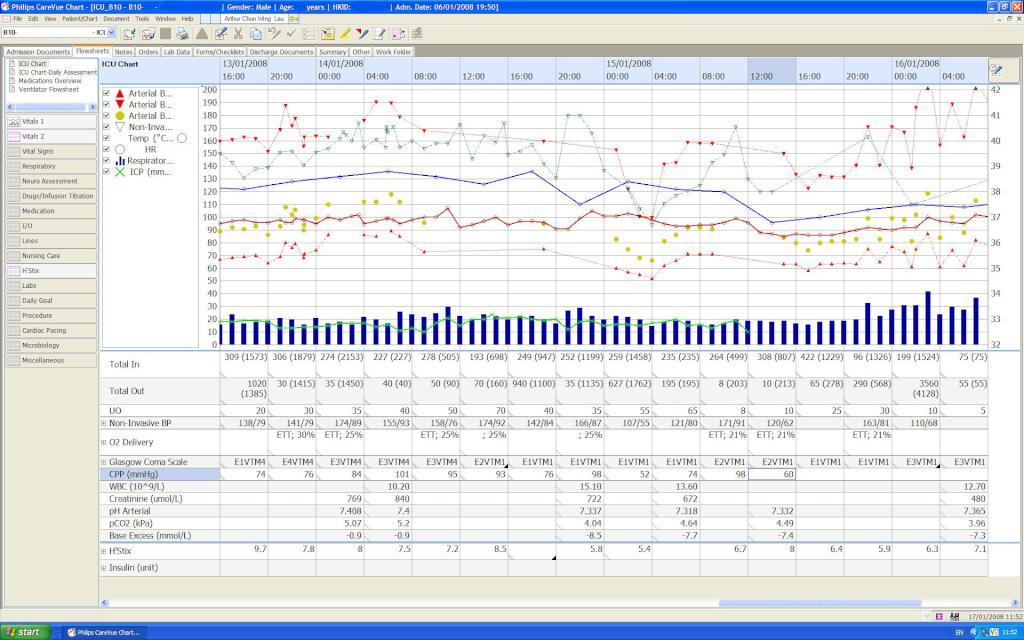
The Clinical Information System (CIS) layout as used in Pamea Youde Nethersole Eastern Hospital
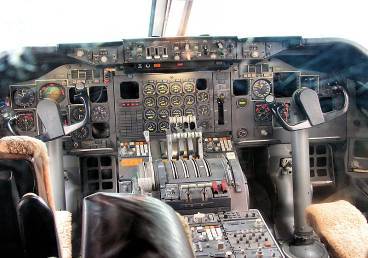
Intensive care is a high risk environment. Not unlike flying a jumbo jet, we have lots of controls and instruments requiring close attention. We maintain patient’s life with various life support devices and potent medications. Unfortunately, the ICU environment can be confusing, and we cannot put bits and pieces of instruments as well organized as the cockpit of a jumbo jet. Adding to the confusion, we use hand written charts and piles computer reports for navigation. Errors are not uncommon in the charts & access to vital information may not be immediate.
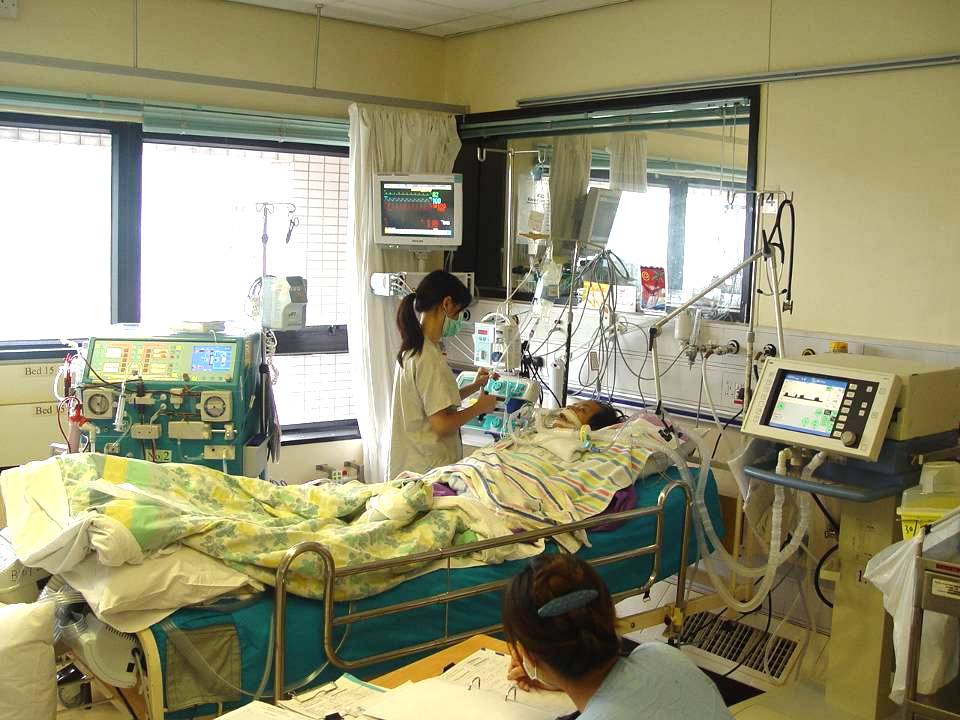
So we attempt to use information technology to get out of such predicament. In ICU, we treat patients by early detection of problems or changes in patient’s condition, make appropriate decision and provide effective intervention. With information technology, we can have:
· logical presentation of relevant data in a timely manner, such that problems or changes are detected;
· immediate access to clinical guideline and computer generated reminders based on pre-set rules (e.g. suggesting to starting feeding if patient has not been fed for greater than 24 hours after admission) to aid appropriate decisions; and
· clear orders and work list to ensure prompt and appropriate execution of treatments.
The information technology we employed is termed “Clinical Information System” or CIS in short. It is used at the point of care for the immediate management of patients, and integrates information from physiology monitors, life support equipments and other computer systems in the hospital.
There are lots of success experiences with CIS in the literature, such as improving patient safety and care time. PYNEH has been using CIS for nearly 2 years by now. As the administrator of the system, I take this opportunity to share with you my views of CIS.
Firstly, some clinicians treat CIS as a novel or smart ‘typewriter’. They consider CIS as just something to made clinical documentation clearer, but nothing more. Our experience with CIS is that it is something much more powerful and will change the daily workflow in your unit. The more your workflow revolves around the CIS, the more you will appreciate its benefits. Consider the analogy of a word processor. It was designed for the production of paper documents, and was used, in the past, only by clerks or secretaries. But nowadays, everyone uses word processor, and mostly to produce documents not intended for printing, just as this article I am writing. So, be prepared to change you work flow if you plan to use CIS.
This leads to the second point I want to share. As the workflow evolves, the CIS needs too. You will never find a system that suits your ICU out of the box. The CIS should be as configurable as possible, such that it can adapt to the different and the ever changing need of different ICUs. Human can always adapt to the ‘stupid’ computer system, but only at the expense of his/her satisfaction and productivity. A system operated by users, who are not buying-in, is bound
Thirdly, the CIS team should be prepared for a ‘major depression’ when it is going live. As everyone is not familiar with the system, everyone will be unhappy and the stress level on the CIS team can be high. The speed of recovery from the ‘depression’ depends on the planning of the system and the workflow. If system and workflow are ‘sensible’, that is, staff can guess the operation of the system or the workflow by common sense; you will see a significant recovery in a month or so. Longer run-in period, that is, the period of charting simultaneously on paper and CIS, might reduce the stress caused by the change, but the excessive workload generated may create even greater stress in a busy unit.
Lastly, one must pay adequate attention to the interface between ICU and other parts of the hospital. As most of them are still operating with paper-based record, transition of patient from ICU to these areas (such as discharging to general ward, temporary transfer to operating theater), need careful consideration. Adequate passage of information is mandatory for the optimal care of the patients. Also, non-ICU staff may also come to work in the ICU. One should make sure that they are comfortable with the CIS, and the worse is the frustration they felt when they failed to login repeatedly and there is no one to help. Moreover, logistics of documents going out of ICU, such as prescriptions or referrals, should be designed such that other departments need no special procedures in the reception of such documents.
Of course, security of the CIS is a hot topic. To have in-depth understanding on this issue, I have undertaken training and have been certified as a Certified Information System Security Professional. As the different brands of CIS have been used in the
These are just my personal opinions and do not represent the opinion of my department or hospital. Comments and your experience are welcome and please post them below or email to me at chankck@ha.org.hk.