
Answer: B
 |
 |
 |
 |
Discussion
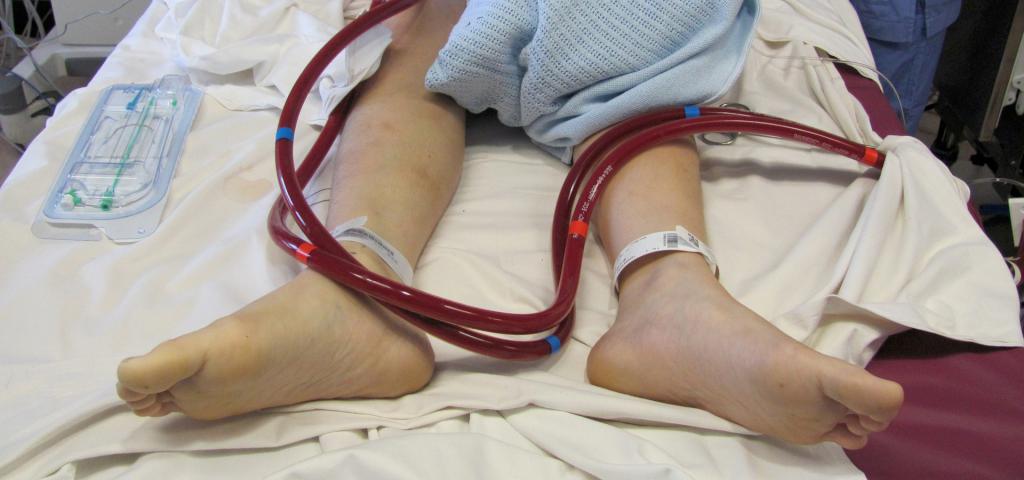
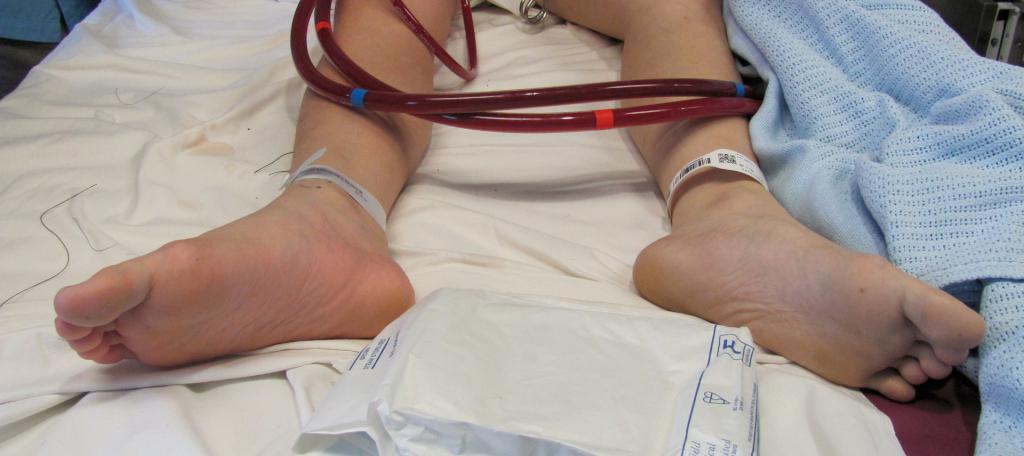
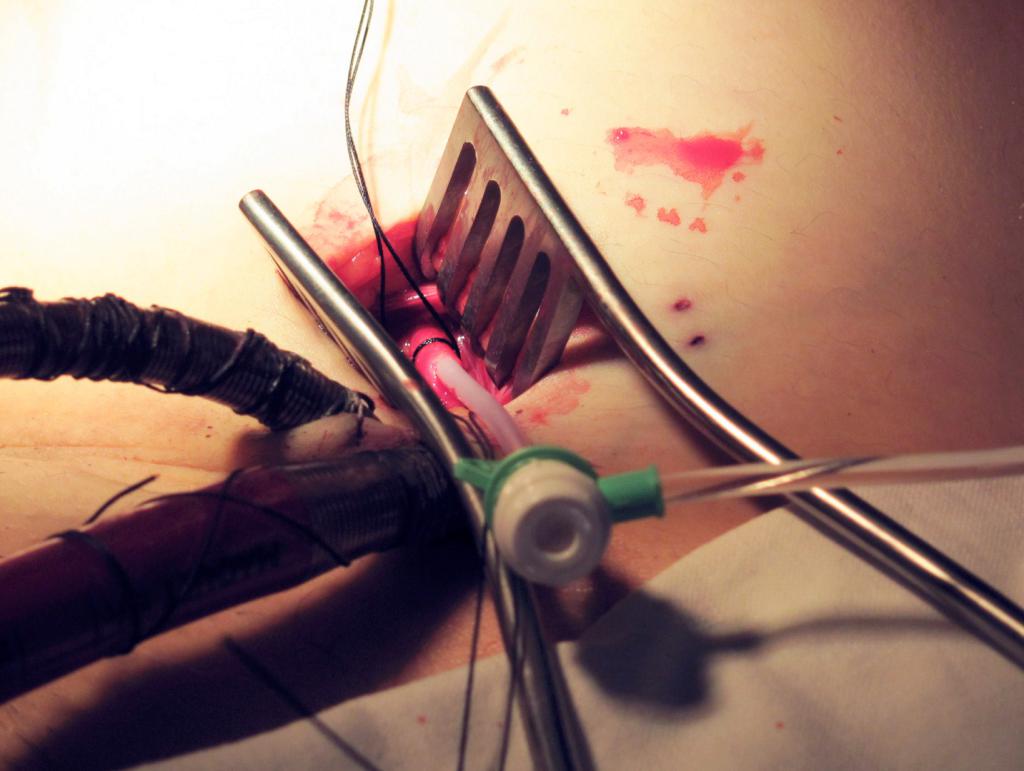
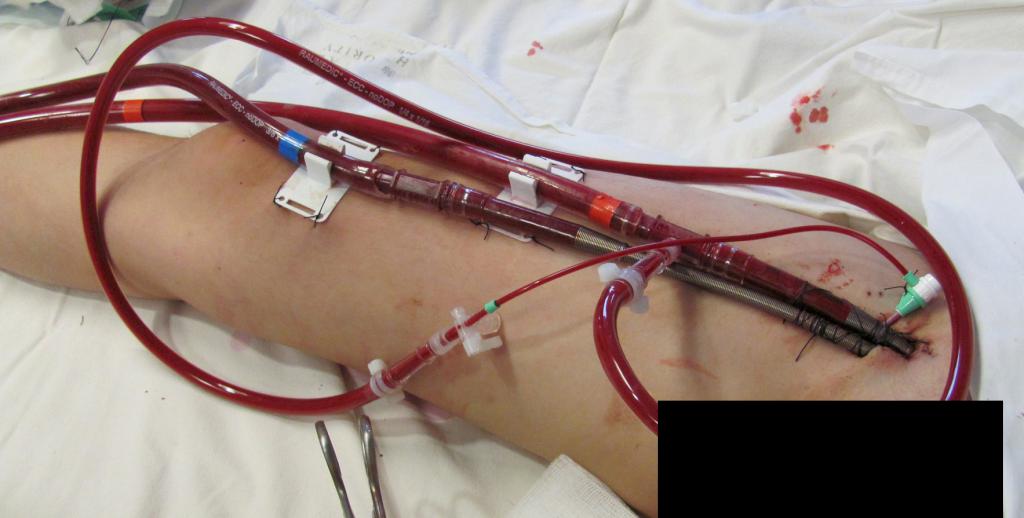
When distal limb perfusion is compromised after femoral artery cannulation, which occurs in 13–25% of cases, a distal leg perfusion cannula (8 to 12 F) can be inserted distal to the cannulation site for limb perfusion. Oxygenated blood from the oxygenator can be directed from the large femoral cannula to the distal limb through the small cannula. The cannula can be inserted percutaneously, but open surgical technique is often required with impalpable femoral pulse. Another method to perfuse the distal leg is cannulation through the vascular prosthesis, which is anastomosed to the femoral artery. This method can provide blood flow to both the body and leg, but is time-consuming and technique-demanding. Blood oozing from the needle hole may be a significant problem in the heparinized patient. Axillary artery cannulation is an alternative method to avoid leg ischemia during ECMO, but it is more difficult and not suitable in patients under cardiac massage. The clinical decision to insert the distal perfusion catheter to prevent limb ischemia is controversial. Some centres insert it routinely, while others have tried to develop selection criteria for placement, e.g. when there are clinical signs of ischemia, or when distal mean femoral artery pressure is less than 50 mm Hg (pressure in the superficial femoral artery, measured at 2 to 3 cm distal to the cannulation site by direct puncture with a 23-gauge needle, see reference).
Reference
Shu-Chien Huang, MDa, Hsi-Yu Yu, MDa, Wen-Je Ko, MDa, Yih-Sharng Chen, MDa,* Pressure criterion for placement of distal perfusion catheter to prevent limb ischemia during adult extracorporeal life support. J Thorac Cardiovasc Surg 2004;128:776-777