Date: 10 & 11 May 2010; Venue: Hong Kong Convention & Exhibition Centre

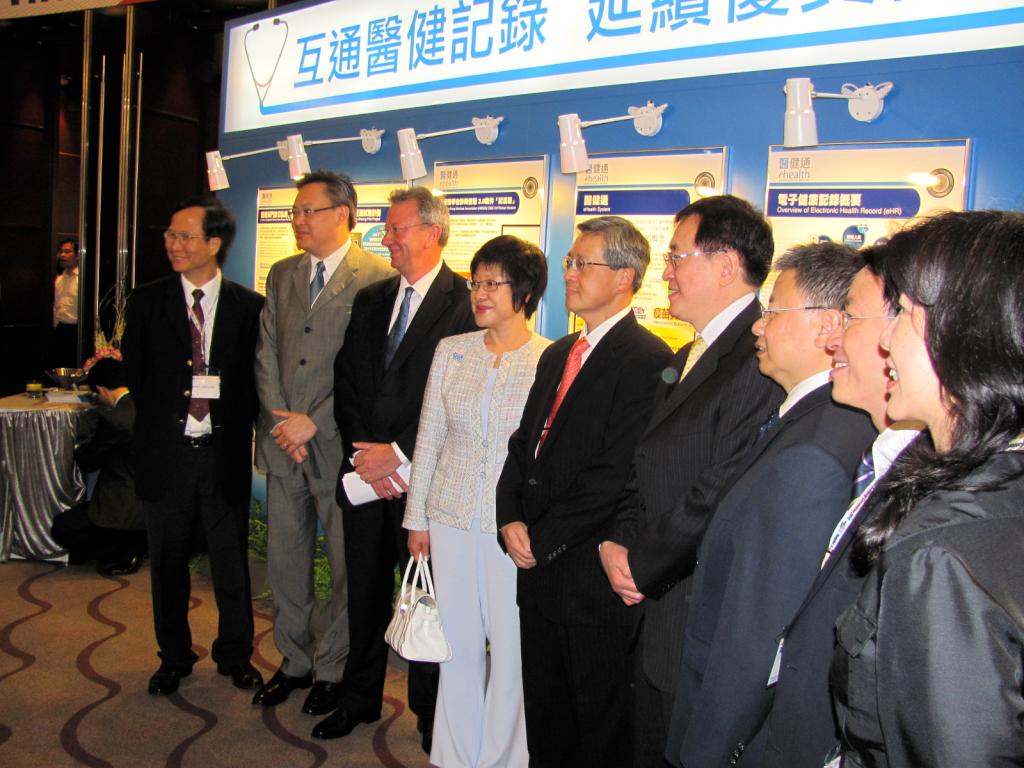
Click Read More for the press release by HA and more photos.
醫院管理局二○一○年研討大會「開心員工 共建民康」
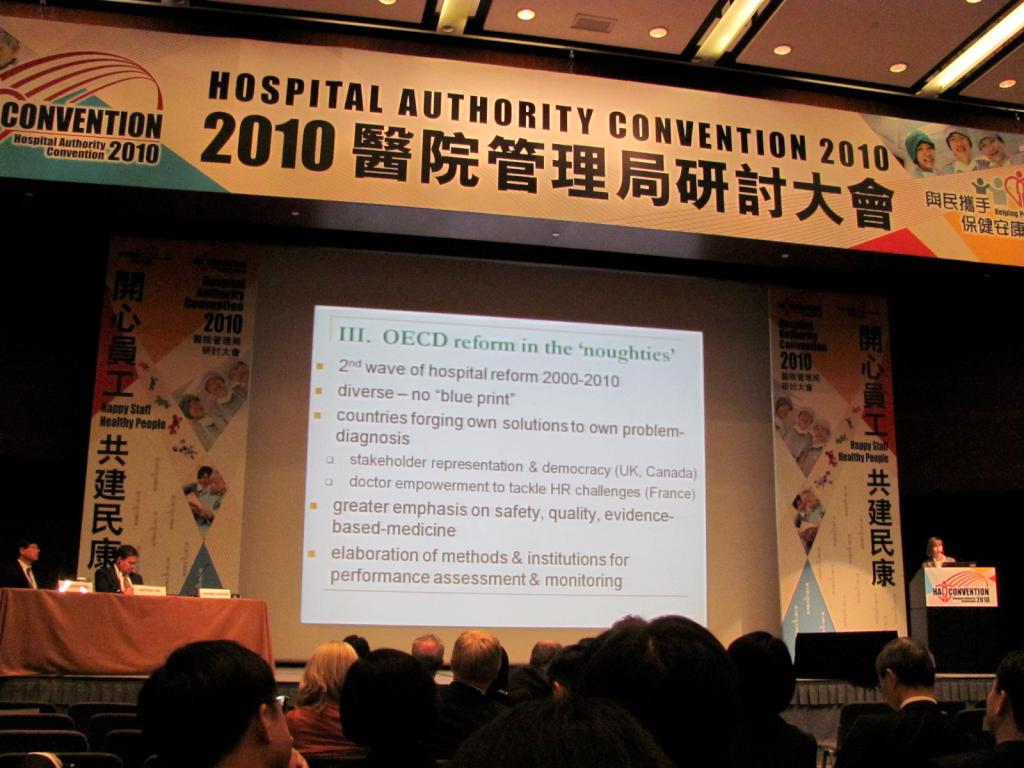
超過三千名本地和來自國內及海外的醫護人員及學者,出席今、明(五月十日及十一日)連續兩日舉行的醫院管理局二○一○年研討大會,就促進市民健康互相交流經驗和意見,深入探討醫護專業發展的趨勢及方向。
醫管局研討大會今年的主題為「開心員工 共建民康」。由本地及國際知名學者和醫護專業人員分享和討論下列課題:
• 機構績效
• 優質服務與病人安全
• 關顧團隊及專業才能
• 策略服務規劃
醫管局二○一○年研討大會開幕典禮於今日(五月十日星期一)上午舉行,主禮嘉賓包括香港特別行政區行政長官曾蔭權、國家衛生部副部長張茅博士、食物及衛生局局長周一嶽醫生、醫管局主席胡定旭及醫管局行政總裁蘇利民。。
胡定旭在致歡迎辭時回顧自從上次研討大會舉行以來經歷兩個充滿挑戰的年頭:「二○○八年研討大會落幕不久,四川便發生大地震。醫管局迅速派遣逾60人的小組趕赴成都,協助救援工作及提供其後的復康服務。」
「其後,醫管局又為二○○八年奧運及殘疾人奧運馬術項目提供醫療支援。不久之後,三聚氰胺污染奶類製品的危機爆發。醫管局在短短數天內便制訂了所需的架構和程序,最終為合共57,000名兒童提供健康檢測、評估和治療服務。」
「正當三聚氰胺的陰霾開始消散、二○○九年度醫管局研討大會籌備工作如火如荼之際,在二○○九年五月一日香港錄得首宗人類豬型流感確診個案。」胡定旭憶述去年研討大會在最後一刻因疫情宣告取消。
胡定旭繼續談及二○○九年十二月,香港主辦東亞運動會,醫管局全力提供醫護支援:「同事的專業表現,讓醫管局成為這次盛事不可或缺的一份子。」
胡定旭指出今年大會的主題是「開心員工‧共建民康」:「員工是我們最重要的資產,因此我們不斷推行各種以人為先的政策措施。」
胡先生在總結發言時感謝政府與醫管局訂定二○○九至二○一二年三年期的撥款安排:「政府在二○一二年或之前,把醫療經費佔政府經常開支的比例增加至百分之十七 ,令我們可以擴充和加強醫管局之服務。」
醫管局行政總裁蘇利民在開幕典禮上發表題為「從P4P到VMV」的主題演講,講述他對醫管局的VMV(「願景、使命和核心價值」)的看法。
蘇利民指出未來的挑戰是透過五項重點工作,引領醫管局實踐機構的願景、使命和核心價值。五項重點工作分別是病人自強措施;管控需求以縮減輪候時間;安全及質素改善措施;合理工作量;以及重整醫護流程。
蘇利民指出政府提出基健醫療改革,其中新的病人自強計劃將會首先專注於糖尿病及高血壓。醫管局的護士及專職醫療診所,亦會繼續協助市民管理慢性疾病。
他繼續談及更新臨床資訊管理系統及發展全港電子健康紀錄的進展。「到了2013/14年底,電子健康紀錄互通平台將可連繫所有公營及私家醫院。到了2018/19年,香港所有居民都會有個人的電子健康紀錄,載有醫管局及私營醫療機構的醫療資料。」
「這將是全球率先推行的電子健康紀錄系統之一。病人需要獲得資料,以管理其個人健康,並作出治療選擇,電子健康紀錄可促使病人自強。」
蘇利民認為縮減病人輪候時間須從多方面入手:「首先,政府增加撥款可令更多輪候病人獲得服務,而『績效撥款』機制亦可鼓勵專注處理輪候時間過長的服務範疇,以診治更多病人。」
他補充稱醫管局現正諮詢臨床服務的同事的意見,研訂新的服務承諾,「現時亦正就關節置換及白內障等服務的輪候時間制訂新的主要成效指標。」
蘇利民引述多項安全及質素改善計劃:「我們已採用嶄新的二維條碼系統,確保在採集化驗樣本方面能正確識別病人身份。七間醫院在推行有關措施八個月後,出錯率每月減少77%。」
「過去兩年,透過『早期事故通報系統』呈報的藥物事故減少了13%。」
繼多項即將推行的質素改善計劃,包括「住院病人藥物指令輸入系統」、無底片放射檢查、及機組人員資源管理模式,蘇利民重點介紹兩項提升服務質素計劃,包括在未來數年推展至所有大型醫院的認證計劃,及醫管局病人滿意度先導調查。
蘇利民續稱為達到「員工開心」的願景,職員的工作量應維持在可應付水平。「醫生方面,我們推行了「醫生工作改革計劃」,成功把每周工作超過65小時的醫生比例從18%降至5%。然而,我們仍需繼續致力減少醫生連續工作的時間。」
他認為未來的挑戰是護士的工作量:「下一步是實施和切實執行合理的護士與病人比例。技術方面的工作已經完成,對目標工作量亦已取得共識,目前只待增加護士人手。」
據護士供應在未來數年的樂觀前景,他有信心護士的工作量可以達到合理水平。
「現時部分醫療服務引入了製造業的一些管理概念,例如『精益思維』、『六式碼』等,令我印象尤深。有關人員審視工作流程,研究可否簡化,探討各個環節對病人的裨益。」
蘇利民總結時指出,五個優先項目將貫徹醫管局全新的願景、使命和核心價值,成為一個真正「為人」服務的機構。
******
HA Convention 2010 – “Happy Staff Healthy People”
Over 3,000 experts and professionals from local, the Mainland as well as international healthcare sector gathered together at the two-day annual Hospital Authority (HA) Convention 2010 which was held today and tomorrow (10 & 11 May 2010) to share innovative ideas for improvement of the health of the community and also help shape the direction of healthcare development in the years to come.
The main theme of this year’s HA Convention is “Happy Staff Healthy People”, which is underpinned by the following sub-themes:
• Organisational Performance
• Patient Safety and Quality
• Caring Workforce and Staff Competence
• Strategic Health Service Planning
The HA Convention 2010 was officially opened by the Chief Executive of Hong Kong Special Administrative Region, Mr Donald Tsang; the Secretary of the Party Leadership Group and Vice Minister of the Ministry of Health, Dr Zhang Mao; the Secretary for Food & Health, Dr York Chow; the HA Chairman, Mr Anthony Wu; and HA Chief Executive, Mr Shane Solomon.
In his welcoming address, Mr Anthony Wu began with a recollection of the challenges in the past two years since the last HA Convention in 2008. “Shortly after the 2008 Convention, it was the Sichuan earthquake and we quickly dispatched a team of over 60 people to Chengdu to help with the rescue operation and to provide rehabilitation services thereafter.”
“It was followed by the medical coverage for the 2008 Olympic and Paralympic Equestrian Events and the handling of the melamine-tainted milk product crisis in which necessary structure and protocols within days to provide screening, assessment and medical services to 57,000 children.”
“Just when we had our sigh of relief on melamine and were getting ready for the 2009 HA Convention, we had our very first confirmed case of human swine flu (HINI) on 1 May 2009 in Hong Kong,” Mr Wu recalled the last minute cancellation of the Convention last year due to the pandemic.
Mr Wu continued with Hong Kong hosting the East Asian Games in December, 2009 and HA made an all-out effort to provide medical support to the Games, “Our staff brought their professionalism into full play and made HA part of the legend.”
He echoed the Convention’s theme of “Happy Staff . Healthy People”. “Staff are our most important asset and we have been rolling out various initiatives to implement our People First policy.”
Mr Wu concluded his address by extending a note of thanks to the Government for a three-year funding arrangement for 2009 to 2012, “that allows us to expand and enhance our services with the increased expenditure on healthcare to 17 percent of recurrent Government expenditure by 2012.”
In delivering his Keynote Speech “From P4P to VMV ”, the Authority’s Chief Executive, Mr Shane Solomon expressed his views on HA’s Vision, Mission and Values (VMV) .
He pointed out that the challenge of HA is to bring the VMV to life with five strategic priorities, namely patient empowerment initiatives, managing demand to reduce waiting time, safety and quality programmes, reasonable workload, and campaign to redesign the care process.
Mr Solomon remarked that as part of the Government’s Healthcare Reform of primary care, new patient empowerment programmes will be offered focusing first on diabetes and hypertension. Nurse and allied health clinics will continue to help people manage their chronic illness. In 2009-10, the programme provided over 47,000 attendances.
He moved on with the progress of updating the Clinical Management System (CMS) and developing the Electronic Health Record for all of Hong Kong. “By the end of 2013/14, the eHR sharing platform will be ready for connection with all public and private hospitals. By 2018/19, Hong Kong residents will have their own personal health records, covering both the HA and private sectors.”
“This is one of the world’s first. Patients need information to manage their own health and to make choices about treatment – the Electronic Health Record will help empower people,” he remarked.
In reducing waiting times, Mr Solomon perceived that multi-pronged effort will be needed. “First, the extra funding from the Government will increase the number of patients treated, and our Pay for Performance (P4P) system provides the incentive to treat more patients through targeting areas of long waits.”
He added that HA is working on new service performance pledges, in consultation with our clinician colleagues, “we are working on new Key Performance Indicators (KPIs) for waiting time such as joint replacement and cataract.”
In safety and quality programmes, he cited several examples of quality improvement. “Our innovative 2D bar coding system has been created to ensure correct patient identification in specimen collection. After eight months of the implementation in seven hospitals, the misidentification error has reduced by 77% per month.”
“In the past two years the number of medication incidents reported through our Advanced Incident Reporting System (AIRS) has dropped by 13%.”
Alongside forthcoming quality improvement initiatives such as Inpatient Medication Order Entry system, filmless radiology and Crew Resources Management System, he highlighted two important HA system-wide programmes, the Hospital Accreditation Programme which will be spread to all the major hospitals over the next few years and the HA-wide Patient Satisfaction Survey which will be piloted this year.
He further talked about managing workloads to achieve “happy staff”. “For doctors, we have started to address this through the Doctor Work Reform programme which has reduced the proportion of doctors working over 65 hours from 18% to 5%. We still have more work to do to reduce continuous working hours.”
He opined that the next challenge is the workload of nurses. “The next step forward is introducing nurse : patient ratios that are reasonable and really put into practice. We have done the technical work and gained a consensus on what the workload should be.”
With a promising outlook in the supply of nurses over the next few years, he is confident that the nurse workload will be brought to more reasonable level.
.
“I am impressed with some methods that are being adapted from the manufacturing industry into healthcare, such as ‘lean thinking’ and the’six sigma’ technique. They look at the work process, and assess whether it can be simplified and whether each part adds some value to the patient.”
Mr Solomon concluded that the five priority projects will carry forward the new VMV and make HA a truly P2P (people-to-people) organisation.
{morfeo 70}
Official website here