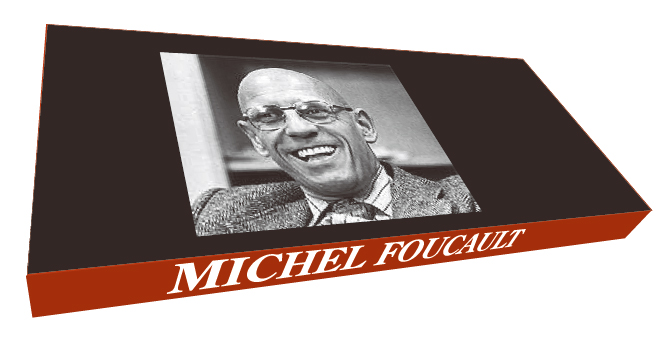
In Michel Foucault‘s (米歇爾·福柯) The Birth of the Clinic (1963), it traces the origins of modern medicine in France at the end of the 18th century during the period 1769 – 1825. Which of the following is not discussed in this book?
A. During this time, medical practices based on superstition were replaced by enlightened empirical science. What changed was both how illness and how the doctor was defined and how these terms were related.
B. It also looks at the political, social and institutional changes.
C. For clinical experience to become possible as a form of knowledge, the patient has to be enveloped in a collective homogeneous space, and tthe hospital became necessary, to open up language to a whole new domain, to see and describe, to perform anatomical study, etc – the anatomico-clinical method was developed.
D. Metaphors were used to describe a lot of influential diseases.
Answer: D
"Illness as Metaphor and AIDS and Its Metaphors" is the theme of Susan Sontag‘s book, not of Michel Foucault’s.
Reference
Michel Foucault. The Birth of the Clinic.
Clare O’Farrell. Michel Foucault.