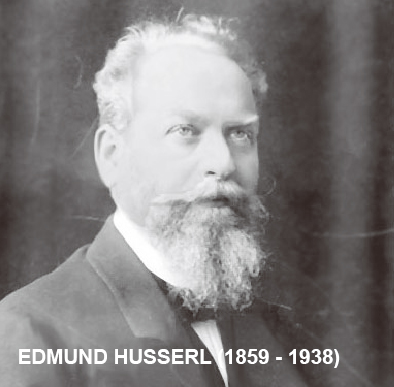
Edmund Husserl (胡塞爾 1859 – 1938) was considered the founder of the philosophy called phenomenology (現象學). Which of the following is incorrect about this approach?
A. Examination of phenomena as they appear in a subject’s experience; the world is analytically accessible only as it is present in a subject’s experience
B. To remove all causal explanations and all presuppositions, to suspend both belief and disbelief, except one’s own certainty, as a subject, that one is indeed an experiencing subject, and then look at the world in a different, a fresh way.
C. The Diagnostic and Statistical Manual (DSM) of Mental Disorders is a good example of the phenomenological approach to medicine.
D. Determinative thinking, judging, inferring, generalizing, particularizing, which are accomplished in the actual sphere of experience, take the appearing things, characteristics, regularities as appearing things, characteristics, regularities as the true one; but this truth is a relative and "subjectively conditioned" truths.
Answer: C
Husserl’s writings were full of neologisms. To understand it by us non-philosophers, phenomenology can be regarded as "recognizing the primacy of the subject’s perspective" and "suspending belief and doubt" in approaching the reality. To apply it to medicine and science, it can be summarised as:
1. Different groups have different, perhaps mutually exclusive, perspectives and have what they take to be supporting evidence for their perspectives
2. What is taken to be scientific theory and scientifically based practice is interwined with personal preferences, practical considerations, values, social concerns, and political decisions
3. Not only diagnostics categories but indeed the very notions of "health" and "illness" and "normality" and "abnormality" are social constructions.
Examples
1. Should we judge all other forms of therapy using the procedural standards of Western medicine as the gold standard, e.g. alternative medicine and traditional Chinese medicine? The reality may be that they are simple not verifiable using the Western Medicine method, i.e. we may be assessing them using the wrong approach. Many of these treatment is individualized, and perceived to be useful to many people, and thus the effect was rendered false by the Western Medicine approach of judgement as placebo effect. Should we approach it from the subject’s experience instead?
2. Classification of diseases into definite categories fulfils the practical need for reimbursement, compensation, etc. But do they really reflect truthfully the actual feeling of the patient from his/her own perpective?
3. Are all disease conditions that we view as abnormalities really need our fixing? Is it not the subject’s own experience of the condition the most important point to consider? Is our fixing necessarily beneficial to them? Does our "help" to those WE regard as needy, poor and sick, necessarily do them good, if we approach it only from our perspective, according to all the rules that we "the normal" have set, without considering their conditions from their own perspectives?
Are we reducing a person to a biological organism ONLY and not focussed upon as a person suffering and expressing an illness as a meaningful phenomenon with significance in his/her everyday world?
References
1. S. Kay Toombs. The Handbook of Phenomenology and Medicine
2. Fredrik Svenaus. The hermeneutics of medicine and the phenomenology of health. Steps towards a philosophy of medical practice.
3. Leszek Kolakowski. Why is there something rather than nothing? Questions from great philosophers. Penguin Books
4. 現象學