Presented by Dr Arthur Kwan at the daily Journal Club of ICU, PYNEH, Hong Kong, on 22 May 2009
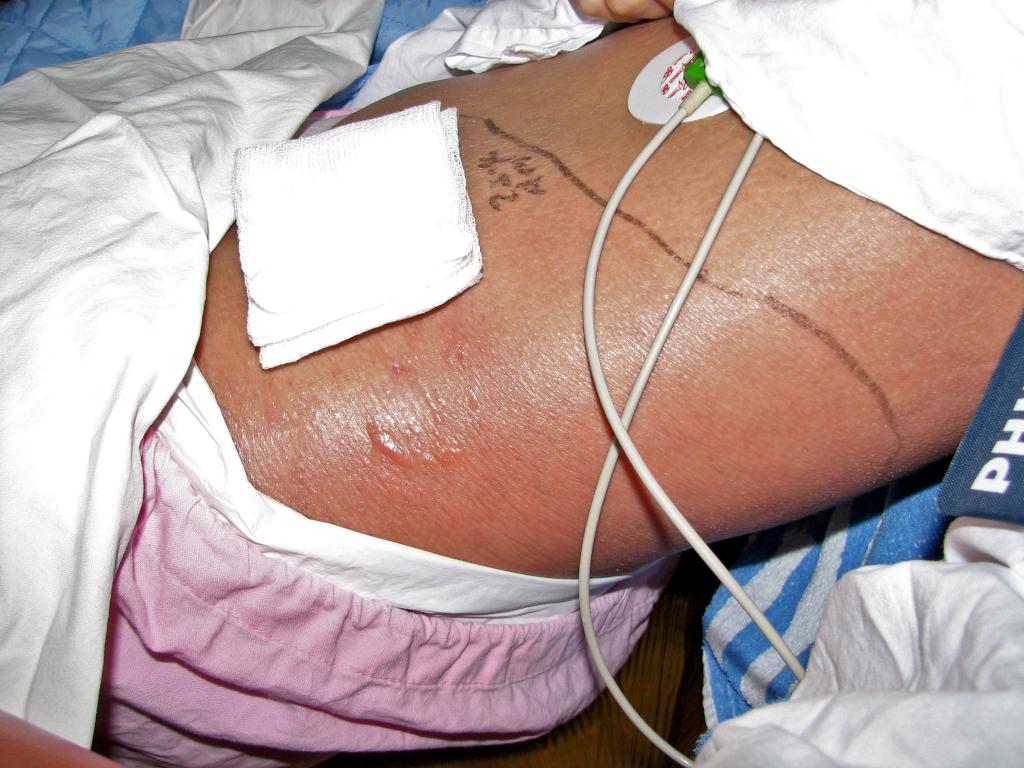
Figure. This gentlemen developed extensive soft tissue infection around two carbuncles (covered by gauze). The carbuncles have been incised and drained, but still he developed septic shock and extending cellulitis. CT showed just some soft tissue edema with no gas formation. Blisters formed subsequently and the infection appeared not under good control despite antibiotics and IV Ig. Culture showed Group A streptococcus (GAS). He eventually required operation which confirmed necrotising fasciitis. The whole picture was compatible with invasive GAS disease with the Streptococcal Toxic Shock Syndrome. GAS necrotising fasciitis is typically not associated with gas formation. He survived the illness. (Photo supplied by Dr LAU Chun Wing Arthur, ICU, PYNEH, Hong Kong).
About the article "Alexandre Boyer, Frederic Vargas, Fanny Coste, et al. Influence of surgical treatment timing on mortality from necrotizing soft tissue infections (NSTI) requiring intensive care management. Intensive Care Med (2009) 35:847–853", it was a retrospective study including 106 patients in a medical intensive care unit equipped with a hyperbaric chamber, conducted to determine independent factors associated with hospital mortality. Which of the following is not true?
A. Time of symptom onset to surgical treatment was related to mortality in the univariate analysis, but not in the multivariate analysis.
B. Hyperbaric oxygen was used in 67% of the non-survivors and 83% of the survivors, the result was not statistically different.
C. Only perianal, genital, perineal, abdominal, or limb NSTI were included.
D. In multivariate analysis, underlying cardiovascular disease, SAPS II, abdominoperineal compared to limb localization, time from the first signs to diagnosis <72 h, and time from diagnosis to surgical treatment >14 h in patients with septic shock were independently associated with hospital mortality.
Answer: A
Time of symptom onset was not recorded in the study.